Research demonstrates that ileal pouch-anal anastomosis significantly improves bowel function, continence, and overall health among patients with ulcerative colitis. Over 12 months, mean scores for bowel function dropped from 50.6 to 24.3 and for mental health increased from 41.5 to 51.2. Furthermore, sexual interest increased significantly for both genders. These findings underscore the procedure’s effectiveness in restoring patient functionality, contributing valuable insights for preoperative counseling.
In a multicenter trial involving 50 adults with chronic gastroesophageal reflux disease (GERD), RefluxStop surgery demonstrated remarkable long-term outcomes over five years. The median GERD-Health-Related Quality of Life (GERD-HRQL) score improved by 90%, and 24-hour pH monitoring revealed a 90% reduction in acid exposure time. Notably, only one participant continued proton pump inhibitors at follow-up, and no device-related complications were reported. Overall, these findings underscore the procedure’s safety and sustained effectiveness.
Researchers found that cytoreductive surgery combined with multimodal therapies significantly improved overall survival and progression-free survival in patients with advanced ovarian, colorectal, and gastric cancers. Analyzing data from 13 studies involving nearly 4,000 patients, the experimental group showed a 14% decrease in mortality risk and enhanced survival rates, although associated with a higher risk of grade 3 or worse adverse events. These results emphasize the potential benefits of individualized treatment approaches for specific cancer types.
Enhanced recovery pathways significantly reduced postoperative morbidity and LOS in cytoreductive surgery and hyperthermic intraperitoneal chemotherapy. Among 150 patients studied, average compliance reached 77.6%, showing a notable negative correlation with postoperative complications and delays in return to intended oncological therapy. Specifically, patients with compliance below 71.6% faced increased morbidity. These findings support the efficacy of ERAS implementations but highlight the need for multicenter studies to bolster these results.
Researchers demonstrated that a robotic malfunction checklist (RMC) significantly reduced the resolution time for complex robotic errors by 43%, averaging 3.9 minutes. In a randomized controlled simulation, participants using the RMC reported lower task load across multiple dimensions and increased confidence in addressing robotic issues during actual surgeries. These findings suggest that implementing an RMC could enhance surgical team autonomy and efficiency, ultimately improving patient safety in operating rooms.
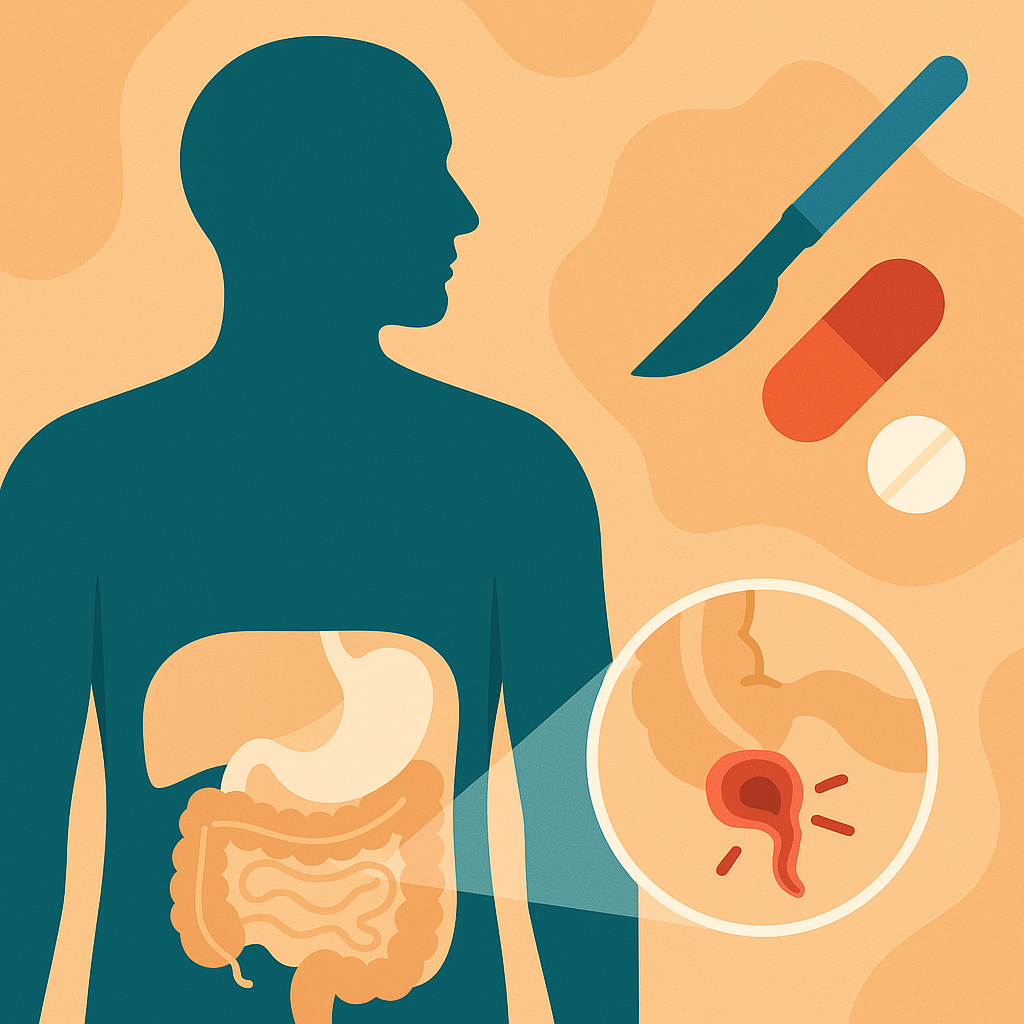
A clear-eyed look at the evolving conversation around uncomplicated appendicitis — and what it means for surgeons.
What’s happening?
We used to think there were only two kinds of people: those who had their appendix out, and those who hadn’t yet.
The scalpel was a rite of passage. You doubled over in pain, someone pressed your abdomen, and off you went to the OR—no questions asked, just the quiet hush of a pre-op hallway and the promise of a scar that would someday be mistaken for a story worth telling.
But that story is changing. Fast.
Surgeons are increasingly encountering a new kind of clinical moment: A stable, otherwise healthy patient presents with acute right lower quadrant pain. Imaging confirms appendicitis — no perforation, no abscess, no appendicolith, no peritonitis. The labs are reassuring. Vitals are normal.
Historically, this patient would go to the OR without much discussion. Now, that conversation is changing.
Several large randomized trials and systematic reviews — including publications in NEJM, JAMA, and the Cochrane Database — support nonoperative management with antibiotics as a viable first-line approach for selected patients with acute uncomplicated appendicitis. Major surgical societies, including the American College of Surgeons and the World Society of Emergency Surgery, have acknowledged antibiotics as an appropriate option in specific contexts.
What does the data actually say?
Surgery (Appendectomy):
Success rate: ~95–99%
Recurrence rate: <1%
Complications: 12–24% (mostly minor, including surgical site infections and post-op ileus)
Pros: One and done, definitive treatment. Still the gold standard.
Cons: OR time, anesthesia, wound healing, longer sick leave
Antibiotic Therapy:
Success rate at 1 year: 62–75%
Recurrence/need for appendectomy: ~25–39% within 1–5 years
Pros: Avoids surgery for most, quicker return to daily activities
Cons: Recurrence risk, need for close follow-up, potential delayed surgery
Outcomes like quality of life and 30-day health status appear similar between groups. Notably, patients who fail antibiotics and require surgery later often report lower satisfaction and longer total time to recovery.
Importantly, no increased risk of perforation has been observed with initial nonoperative management — if patients are carefully selected.
So, who’s a candidate for antibiotics alone?
Most guidelines agree on a few criteria:
Hemodynamically stable
Nonpregnant, immunocompetent adults
Imaging-confirmed uncomplicated appendicitis
No appendicolith
No perforation, phlegmon, abscess, or diffuse peritonitis
Symptoms <48 hours
Appendiceal diameter <13 mm
No history of IBD
Reliable for close follow-up and reassessment
Presence of an appendicolith is a key red flag — significantly increasing the risk of treatment failure and abscess formation. For these patients, surgery remains the preferred approach.
What are patients choosing?
Despite the evidence, many patients still opt for surgery. It’s definitive. It feels cleaner. For some, it’s about avoiding the anxiety of recurrence. For others, it’s about trust in the surgical solution.
That said, a significant number — especially younger adults and those concerned about surgical downtime — prefer to try antibiotics. Surveys suggest that when properly counseled, roughly 40% of eligible patients would choose antibiotics.
Surgeons, therefore, are increasingly tasked with not just recommending a course of action, but helping patients weigh risks, timelines, and priorities — and making space for preference.
Where do we go from here?
The evidence is strong, but not absolute. While surgery remains the gold standard — especially for complicated appendicitis — antibiotics are no longer fringe. They’re endorsed, studied, and increasingly appropriate in the right contexts.
That doesn’t mean the scalpel is obsolete. It means something more interesting: our toolbox just got bigger.
Antibiotics aren’t a replacement — they’re another arrow in the quiver. A new kind of precision. A way to meet patients not just where their appendix is, but where their lives are.
There are moments when cutting is still the clearest answer. But there are also moments — a wedding in two days, a crucial work trip, a single parent with no backup — where delaying the knife might serve the patient better.
This isn’t about choosing between tradition and innovation. It’s about recognizing that medicine is moving, and our role is shifting with it — from decision-makers to decision-shapers.
The question isn’t just should we cut?
The real question is: what does the patient need right now — and what tools can we use to get them there?
Researchers found that jejunal limb decompression (JLD) significantly lowers the incidence of early-onset postoperative cholangitis in patients undergoing pancreaticoduodenectomy. In a study involving 281 patients, the incidence dropped from 20.7% to 1.7% when JLD was employed. Additionally, a drainage volume of ≥1555 ml within 14 days post-surgery was identified as an independent risk factor for cholangitis. Increased peristalsis from decompression improved recovery and may reduce postoperative complications.
Researchers conducted a systematic review and meta-analysis of the Transanal Opening of Intersphincteric Space (TROPIS) procedure for high complex anal fistulas, involving six studies and 499 patients. The analysis revealed a one-time cure rate of 80%, with a recurrence rate of 20% and an impressive final cure rate of 89%. Notably, no adverse events were reported, indicating the procedure’s safety and efficacy. Sensitivity analyses confirmed the stability of these promising results.
Researchers found that endoscopic submucosal dissection (ESD) offers superior clinical outcomes for early oesophageal cancer compared to endoscopic mucosal resection (EMR). ESD demonstrated a shorter hospitalization time (7.51 vs. 9.16 days) and a significantly better postoperative quality of life. Although ESD surgeries took longer, both techniques achieved comparable resection rates. Importantly, ESD resulted in fewer postoperative complications (4.65% vs. 13.95% for EMR), highlighting its potential as a safer option for patients.
Researchers have introduced the Soft Coagulation Scissors (SoCS) method, revolutionizing robot-assisted colorectal surgery. This innovative technique combines soft coagulation with curved scissors, effectively preventing vessel wall damage and minimizing bleeding during lymph node dissection. The SoCS method demonstrates high hemostatic efficacy while allowing for precise dissection, thereby enhancing the safety of surgical procedures near critical blood vessels. It marks a significant advancement in surgical approaches for colorectal cancer treatment.